
Concrete elements meet the strict security requirements of data centers
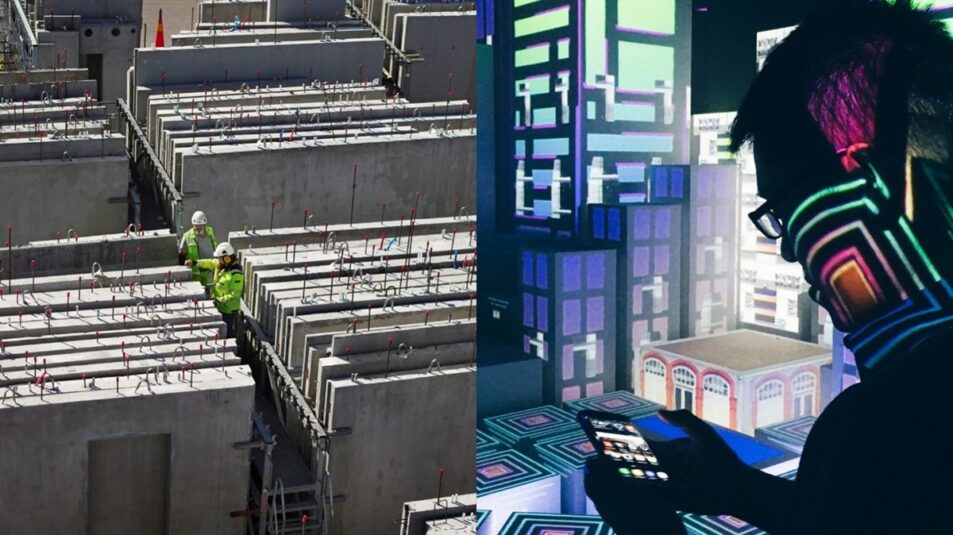
Data centers are emerging as a critical foundation of the digital society. The rise of artificial intelligence and the growing use of digital services are driving unprecedented demand for data storage and computing power, fueling a rapid expansion of data center construction across Finland. At the same time, demands on the safety, operational reliability, and service life of these critical buildings are increasing.
Concrete elements play a key role in addressing the safety challenges of data center construction. Data centers must operate without interruption 24 hours a day, every day of the year.
The structures must withstand not only normal use but also various exceptional situations, such as fires, stresses caused by weather conditions, and potential security threats.
If a data center fails or its security is compromised, the consequences can be severe economically, socially, and in terms of national security.
“Precast concrete structures inherently offer strong structural durability and high fire resistance. They help protect valuable equipment and reduce risks in situations where business continuity is of paramount importance,” says Satu Parikka, Sales Team Manager at Parma.
“In data centers, even a single outage can cause significant financial losses. That’s why the building and its structures must be exceptionally reliable,” Parikka explains.
“Safety during the actual construction phase must also be ensured, as it directly affects the schedule. An accident or serious hazardous situation can halt a single work phase or, in the worst case, the entire construction site, thereby quickly affecting the site’s progress. Concrete elements manufactured under controlled factory conditions reduce safety risks on the construction site,” Parikka continues.
Fire safety is a critical priority in data center construction
Fire safety is one of the most important design considerations for data centers. Although server rooms are equipped with advanced fire suppression and monitoring systems, the building’s frame, as well as its wall and roof structures, must also support overall safety.
“Concrete elements do not burn, nor do they produce toxic gases in a fire. Furthermore, the high fire resistance of concrete structures helps limit the spread of fire within the building, which can be crucial for the continuity of equipment, data, and business operations,” explains Design Manager Pasi Salmela.
A sustainable solution for protecting critical infrastructure
Data centers are designed to last for decades. For this reason, the structures’ long service life and low maintenance requirements are significant advantages.
“Massive precast concrete structures retain their properties for a long time, even under demanding operating conditions. These robust structures protect critical equipment from external influences and ensure the data center’s operational reliability throughout its entire lifecycle,” says Pasi Salmela.
“Concrete elements can also be used outside the data center building. For example, various types of cabling can be safely protected using concrete cable ducts,” Salmela continues.
“Early collaboration with Parma’s own design team makes sense. In data center projects, we can model efficient structural solutions based on our product concepts as early as the project planning phase. Using a building information model, we can visualize the concrete element options for the data center and compare the impacts of different solutions on the implementation,” Salmela concludes.
Fast construction ensures a successful investment
In addition to safety, data center projects are characterized by particularly tight schedules. International operators want to bring capacity online as quickly as possible to meet the growing demand for services.
“Factory-manufactured concrete elements enable an efficient and predictable construction process. With highly developed and well-established element solutions, the on-site phase is accelerated, quality control is improved, and project schedule risks are reduced,” explains Satu Parikka.
“Our fast delivery capability is based on an extensive network of plants and highly standardized production, designed for large and technically demanding construction projects. Once the project’s initial data is in order and design is proceeding on schedule, the first prefabricated elements can be delivered to the construction site very quickly,” Parikka summarizes.
Read more about the CONSOLIS TecnyData data center solution here.
Lisätietoja:
Satu Parikka, Sales Team Manager, Consolis Parma
Phone: 040 844 3315
satu.parikka@consolis.com
Pasi Salmela, Design Manager, Consolis Parma
Phone: 040 527 8478
pasi.salmela@consolis.com